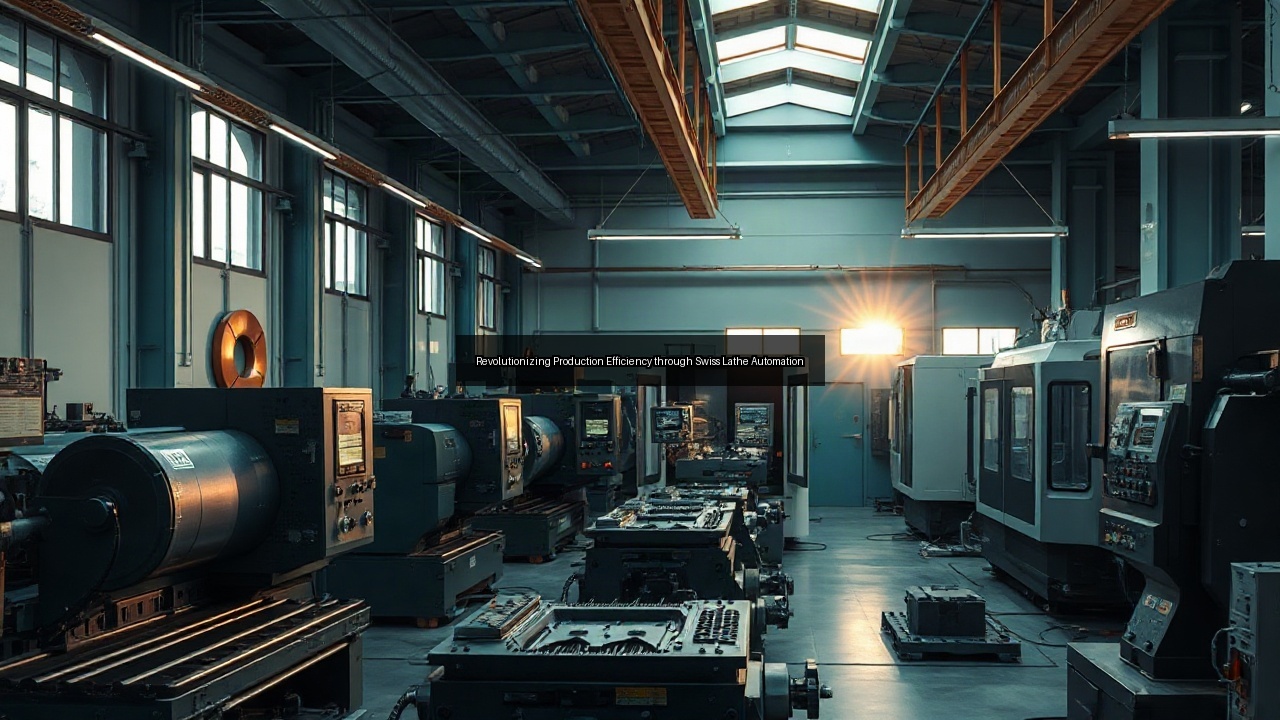
Revolutionizing Production Efficiency through Swiss Lathe Automation
Understanding Swiss Machining Technology
The Evolution of Swiss Lathes
Swiss machining technology originated in the late 19th century, revolutionizing the way precision parts were produced. Initially, Swiss lathes were designed for creating small, intricate components, primarily for the watchmaking industry. The design allowed for high-speed machining of small diameters and complex geometries, making it a favorite among precision manufacturers. Over the decades, advancements in technology have transformed these machines from manual setups to sophisticated CNC (Computer Numerical Control) systems. This evolution has led to greater flexibility, accuracy, and efficiency, enabling manufacturers to tackle complex machining tasks that were previously deemed impossible.
Key Features of Swiss Style Lathes
Swiss style lathes possess unique features that distinguish them from traditional lathes, making them particularly well-suited for high-precision applications. One of the standout characteristics is the sliding headstock, which allows the workpiece to be held closer to the tooling, reducing deflection and enhancing accuracy. Additionally, these lathes often incorporate multiple spindles and tool stations, enabling simultaneous operations that significantly reduce cycle times. The ability to perform operations like drilling, milling, and tapping all in one setup streamlines workflows and boosts productivity. Furthermore, Swiss lathes can handle a variety of materials, including hard metals like nickel, which is often used in aerospace and medical applications due to its strength and corrosion resistance.
Comparative Analysis: Swiss vs. Traditional Lathes
When comparing Swiss lathes to traditional lathes, several factors come into play that highlight the advantages of Swiss machining. Traditional lathes typically excel in producing larger parts and simpler geometries, while Swiss lathes are designed for high precision and intricate detail in smaller components. The setup time for traditional lathes can be longer due to the need for multiple setups, whereas Swiss lathes can often complete multiple operations in one continuous process, significantly increasing throughput. Additionally, Swiss lathes often have advanced CNC capabilities that allow for real-time adjustments and monitoring, enhancing overall production efficiency. In competitive industries where precision and speed are paramount, the choice between Swiss and traditional lathes can greatly affect manufacturing outcomes.
The Role of Automation in Enhancing Production Efficiency
Integrating Software Solutions for Streamlined Operations
Automation plays a pivotal role in modern manufacturing, particularly in the context of Swiss machining. Integrating advanced software solutions into machine shop operations facilitates real-time data monitoring and analysis, enabling manufacturers to make informed decisions quickly. Software platforms can optimize machining processes by analyzing cycle times, tool wear, and machine performance, leading to reduced downtime and enhanced productivity. Furthermore, automated scheduling and inventory management systems ensure that materials and tools are available when needed, eliminating bottlenecks in production. By utilizing these software solutions, manufacturers can achieve a level of efficiency previously unattainable, allowing them to meet high-volume demands while maintaining quality standards.
Optimizing Tooling and Geometries for Increased Productivity
Tooling optimization is crucial in enhancing the productivity of Swiss machining operations. The use of high-quality, specialized tools designed for specific materials and geometries can significantly reduce machining times and improve surface finishes. Swiss style lathes allow for quick tool changes, enabling operators to switch between different sizes and types of tooling with minimal delay. By analyzing the geometries of parts being machined, manufacturers can select the most effective tooling solutions, reducing the likelihood of errors and rework. Advanced computer-aided design (CAD) and computer-aided manufacturing (CAM) software provide valuable insights into tool paths and machining strategies, ensuring that each component is produced efficiently and cost-effectively.
The Impact of Automation on Machine Shop Workflows
Automation has a profound impact on machine shop workflows, streamlining processes and enhancing overall efficiency. Automated Swiss lathes can run unattended for extended periods, allowing operators to focus on other tasks while the machines produce parts. This not only maximizes machine utilization but also reduces labor costs. Moreover, automation minimizes human error, leading to improved quality control and consistency in production. The integration of robotics and other automated systems can further enhance workflows by handling material loading and unloading, which frees up skilled labor for more complex tasks. As a result, machine shops equipped with automated Swiss machining solutions can respond more flexibly to market demands, ensuring timely delivery of high-quality machined parts.
Applications of Swiss Machining in Various Industries
Precision Machining in Aerospace
Aerospace is one of the most demanding industries when it comes to precision machining, making Swiss machining technology indispensable. Components such as turbine blades, fuel injectors, and landing gear parts require extreme accuracy and reliability. Swiss lathes excel in producing these intricate components, often utilizing advanced materials like titanium and nickel alloys that withstand harsh conditions. The ability to maintain tight tolerances and achieve superior surface finishes makes Swiss machining the go-to solution for aerospace manufacturers. Furthermore, the rapid production capabilities of Swiss style lathes allow for quick prototyping and small-batch production, which are essential in the fast-paced aerospace sector.
Utilizing Swiss Machining for High-Volume Production
Swiss machining technology shines in high-volume production environments, where efficiency and precision are critical. Industries like automotive and medical device manufacturing benefit from the ability of Swiss lathes to produce thousands of identical components with minimal variation. The automated nature of these machines allows for continuous operation, maximizing output while minimizing the need for manual intervention. High-volume production not only meets market demand swiftly but also helps reduce unit costs through economies of scale. Swiss machining solutions provide manufacturers with the flexibility to adapt to changing requirements, whether it's adjusting production rates or switching to different product lines without significant downtime.
The Significance of Nickel in Swiss Machining
Nickel plays a vital role in Swiss machining due to its unique properties, such as high corrosion resistance and excellent mechanical strength. These characteristics make it an ideal choice for applications in harsh environments, including aerospace, automotive, and medical fields. Swiss lathes adeptly process nickel alloys, producing components that require intricate geometries and fine tolerances. The ability to machine nickel effectively ensures that manufacturers can deliver durable parts that meet stringent industry standards. Additionally, advancements in tooling and machining strategies specifically tailored for nickel alloys enhance productivity, allowing for efficient production while maintaining the quality and reliability necessary for critical applications.
Future Trends in Swiss Machining and Automation
Advancements in CNC Swiss Machining Technology
Future trends in Swiss machining technology focus on the continual advancement of CNC systems, which are becoming increasingly sophisticated. Enhanced software capabilities allow for more complex machining operations, while improved machine designs increase rigidity and stability. These trends lead to higher precision and faster cycle times, making Swiss lathes even more competitive. Manufacturers are also exploring the integration of artificial intelligence (AI) to predict maintenance needs and optimize machining parameters dynamically. Such advancements will further position Swiss machining as a leader in precision manufacturing, enabling companies to produce high-quality components efficiently.
The Rise of Smart Machines in Production
The emergence of smart machines represents a significant shift in the manufacturing landscape. These machines utilize IoT (Internet of Things) technology to collect and analyze data in real time. Swiss lathes equipped with smart technology can monitor performance and communicate with other machines, creating a fully integrated production environment. This interconnectivity enhances decision-making processes and allows for proactive adjustments to machining operations. As the industry moves toward smart manufacturing, Swiss machining technology will play a crucial role in achieving higher levels of efficiency and output, aligning with the needs of modern production environments.
Sustainability Considerations in Swiss Machining Processes
Sustainability has become a critical focus in manufacturing, prompting the need for greener machining solutions. Swiss machining processes can adopt sustainable practices by reducing waste and optimizing energy consumption. The use of advanced tooling and machining techniques minimizes material waste, while automation helps in managing resources more efficiently. Furthermore, manufacturers are exploring environmentally friendly cutting fluids and recycling methods for scrap materials generated during production. By prioritizing sustainability, Swiss machining not only meets regulatory requirements but also appeals to customers increasingly interested in eco-friendly practices, enhancing the overall reputation of manufacturers in the industry.